
Plastic & Rubber Moulding
Manage tool life wear, masterbatch dosing ratios, regrind consumption logs, machine tonnage configurations, and strict cure time variables through an ERP platform engineered for high-volume plastic and rubber manufacturing.
Won and Lost in Fractions of a Second
In plastic injection, blow moulding, and rubber extrusion, margin isn’t decided at the sales desk, it’s decided in tenths of a gram of regrind, fractions of a second of cycle time, and cavity imbalances nobody’s watching in real time. Material degradation, tool wear, and scrap creep are silent until they show up as a blown quarter. PCSOFT eliminates the shop floor blind spots that cause it. Production scheduling, tooling lifecycle tracking, real-time scrap logging, and material dosing all run on one engine, giving production teams immediate visibility into machine downtime, cavitation changes, and resin usage across every work centre as it happens, not at shift-end. Press and extruder metrics feed directly into commercial variables, so plants can control material variance, manage complex family moulds, and hold the dimensional compliance demanding OEM clients require, without reconstructing the numbers after the fact.
NDUSTRY CAPABILITIES
Built Around Core Automotive Operations
Precision Dosing & Masterbatch Control
Material cost creep in plastics manufacturing rarely announces itself, it just quietly inflates raw input cost run after run. Track precise ratios of virgin resin, masterbatch colorants, performance additives, and regrind allowances to maintain material consistency while minimising raw input costs. Every batch is dosed to specification, not to operator habit.
Multi-Cavity Tool & Die Lifecycles
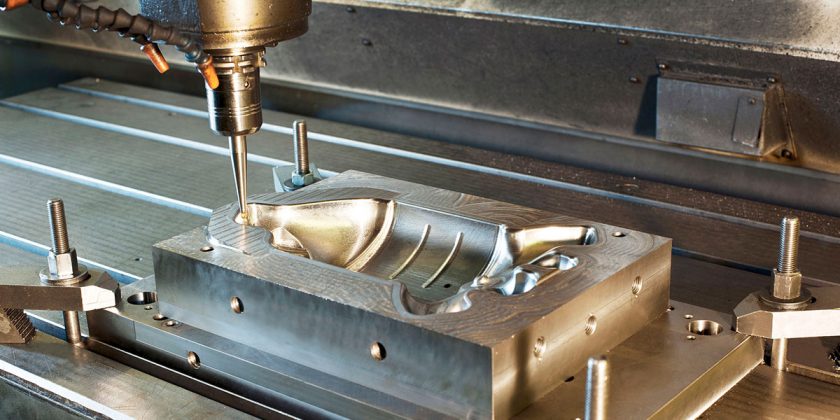
A cavity blockage caught late doesn't just cost one shot, it costs every part run until someone notices the dimensional drift. Track cumulative shot counts, individual cavity blockages, tooling maintenance triggers, and storage locations to protect dimensional quality and prevent tool failure. Maintenance happens on a schedule the tool's actual usage sets, not a calendar guess.
Real-Time Shot & Scrap Tracking
Scrap that isn't tied to a cause is scrap you can't fix. Capture floor rejects by specific defect codes, flashing, short shots, silver streaks, linked directly to the active machine, operator shift, and material batch. Recurring defects become visible by machine and by shift, not buried in an aggregate scrap percentage.
Regrind & Material Reclamation Loops
Regrind used past its safe limit degrades part quality in ways that don't show up until the client's inspection. Log, track, and manage the lifecycle of sprues, runners, and rejected parts through the granulation process, tracking exact consumption limits for subsequent production runs. Reclaimed material stays within spec instead of becoming a quiet quality risk.
Dynamic Tonnage & Press Scheduling
A press scheduled without checking tonnage compatibility means a changeover nobody planned for. Sequence jobs automatically based on machine tonnage capacities, material families, color changeover rules, and tool compatibility to minimise teardown time. Scheduling decisions account for changeover cost before the job is committed, not after the press is already stopped.
Integrated Moisture & Cure Controls
Under-dried resin or an inconsistent vulcanisation cure produces parts that fail inspection for reasons nobody can trace back. Log process parameters including resin pre-drying times, barrel temperature profiles, injection pressures, and rubber vulcanisation cure times to ensure physical part integrity. Process deviations are caught at the parameter level, before they become a rejected part.
THE CONNECTED FACTORY
Connect Every Variable That Impacts Moulding Performance
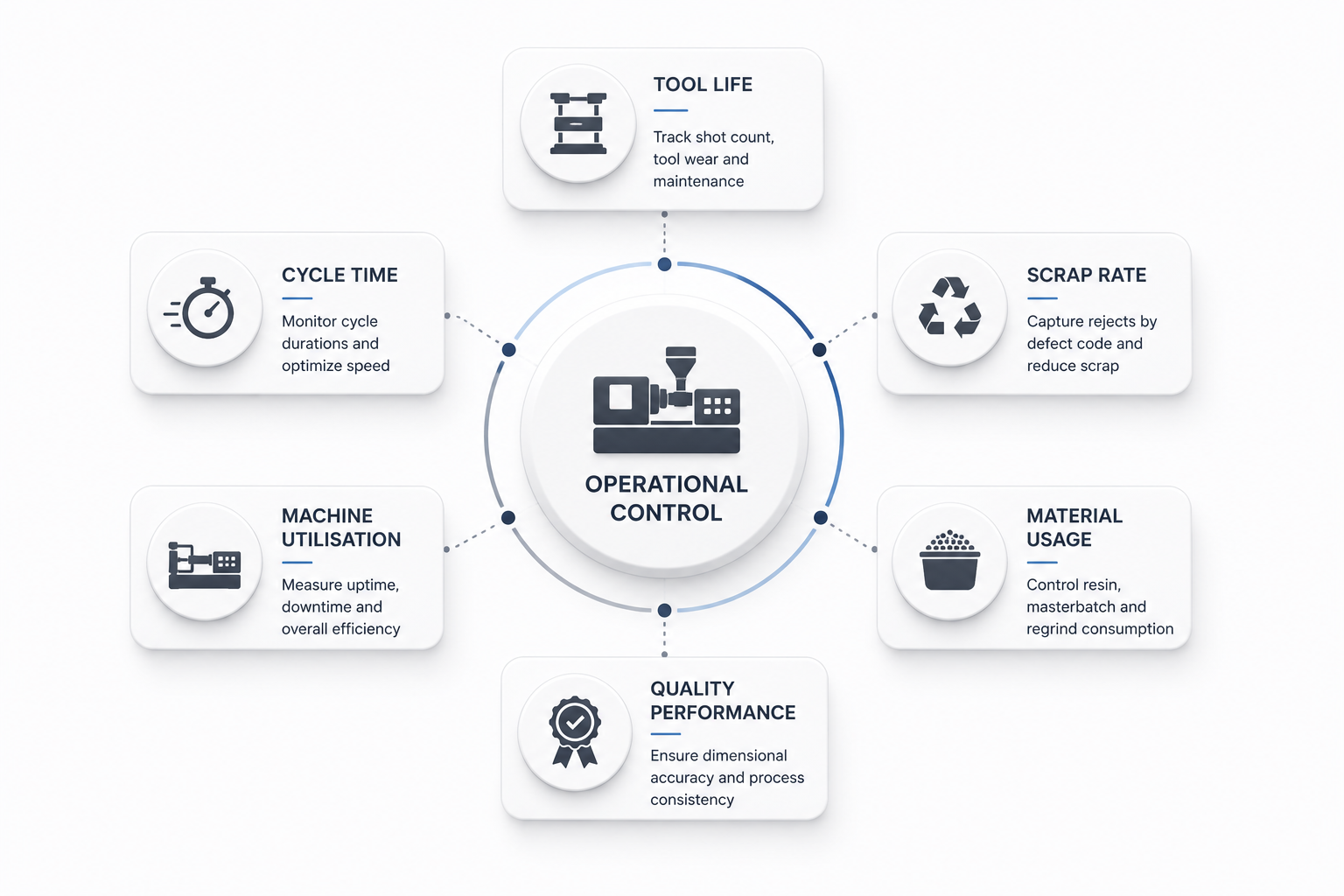
Our ERP connects production planning, tooling management, material control, quality, inventory, procurement, dispatch, and costing within a unified manufacturing environment. Every transaction updates related functions automatically, creating a consistent flow of information across the business. With real-time visibility across plant floor and business operations, manufacturers can monitor material consumption, track tooling performance, analyse production output, manage inventory movements, control quality processes, and understand operational costs from a single system. The result is greater operational control, improved decision-making, and a more connected manufacturing operation.
SYSTEM CAPABILITIES
Control Every Batch, Tank, and Bottling Line from One Screen
Material Blending, Dosing & Regrind Optimization
Maintaining liquid flavor profiles and safety standards requires tight control over raw ingredient batches, chemical additions, and carbonation levels. High-velocity beverage lines run on razor-thin margins where even a minor imbalance in chemical potency or brix levels can compromise entire production runs and result in expensive product recalls. PCSOFT lets lab technicians and compounders enter real-time blend analysis right into shop floor interfaces, automatically adjusting masterbatch targets to preserve consistency. By operationalizing these variables directly at the mixing terminal, the system removes the guesswork from complex fluid processing. This tight alignment ensures that high-cost liquid concentrates are never over-allocated and that every batch matches its exact chemical profile before it is routed to downstream filling lines.
Lot-controlled tracking for raw liquid concentrates, flavor compounds, sweeteners, and preservative batches.
Dynamic bill of material scaling based on real-time ingredient assay values and target tank capacities.
Temperature-over-time logs monitoring jacketed fermentation tanks, flash pasteurization units, and chilling loops.
Raw material variance analysis comparing volumetric meter data with theoretical inventory deductions.
Syrup-to-water dilution ratio tracking ensuring uniform product density and preventing material over-consumption.
Transitional flush logging tracking liquid scrap volume costs during line changeovers.
Tank Management, Asset Status & Clean-in-Place Lifecycle
High-throughput liquid processing relies on clean, structurally sound vessel capacities to protect product purity and prevent cross-contamination. Managing multiple fermentation, holding, and bright beer tanks across fluctuating production cycles makes it easy to lose visibility over batch location and cleanliness status. The system tracks storage availability, monitors active product aging, and enforces automated CIP cleaning blocks before an un-sanitized tank can receive a new batch run. If a vessel has not completed its designated sanitation routing, the platform locks down the digital terminal and blocks operators from executing material transfers. This automated floor governance guarantees strict adherence to validation protocols while maximizing total tank utilization rates across the facility.
Live tank capacity monitoring displaying volume levels, density changes, and settlement layers.
Automated CIP validation logs tracking cleaning chemical concentrations, contact time, and wash temperatures.
Product aging and fermentation phase tracking with automated notification triggers for extraction milestones.
Tank-to-tank transfer logging recording exact valve routings, pipeline usage, and transfer volume differentials.
Mechanical vessel maintenance logs detailing filtration screen replacements, valve rebuilds, and seal checks.
Subcontracted tank inspection tracking and regulatory safety validation records attached directly to assets.
High-Speed Bottling, Cap Torque & Packaging Execution
Tracking products through high-speed filling valves, capping stations, labeling heads, and end-of-line case packing requires agile tracking loops. Because modern bottling lines process hundreds of units per minute, mechanical bottlenecks or a single shattered glass bottle can cause immediate, margin-eroding downtime. The platform monitors cycle run-rates, captures machine stoppages, and matches finished cases to intermediate liquid batch runs. By capturing live data straight from electronic filling counters and line sensors, the system surfaces exact performance metrics to floor supervisors. This granular visibility allows your team to isolate recurring machine faults, manage multiple packaging configurations, and accurately measure true operational line efficiencies.
Automated inline counter integration capturing actual vs. target line speeds, fill levels, and bottle drops.
Rejection reason-code capture on the floor covering low fills, missing caps, cocked labels, and broken glass.
Downtime categorization loops isolating time lost to label roll changes, glass breakage, or filler nozzle blockages.
Packaging routing tracking managing variations between single bottles, multi-packs, cases, and pallet builds.
Cap torque validation logs tracking physical security metrics directly from line checkpoint gauges.
Retain-sample catalog tracking mapping pull schedules for physical library boxes back to active batch records.
Food Safety Quality Validation & Compliance
Global regulators and distribution chains enforce absolute traceability metrics and zero-contamination thresholds. Meeting these strict mandates requires a comprehensive, unbroken digital audit trail connecting raw incoming materials directly to delivered customer pallets. PCSOFT automates quality logging across physical, chemical, and shelf-life variables, instantly building consumer-safe genealogy certificates at dispatch. Instead of scrambling to compile paper logs during compliance audits, management can pull exact batch history with a single click. This proactive quality architecture ensures that no finished product leaves the warehouse gate without fully clearing every chemical, micro-testing, and validation gate on the floor.
Inbound raw material inspection workflows requiring immediate safety sign-offs before bulk tank unloading.
Multi-point lab logging tracking critical technical metrics like brix, pH, acidity, and dissolved oxygen.
Incubation and micro-testing hold-period tracking enforcing quarantine locks until lab clearances are signed.
Component batch trace logs linking final pallet barcodes back to raw ingredient lots and line personnel shifts.
Automated regulatory compliance label generation detailing allergen data, expiration dates, and tracking barcodes.
Digital quality hold gates blocking warehouse fulfillment apps from staging any batch lacking final QA release.
Liquid Transfer, Routing & Mass Balance Tracking
Tracking fluid movement through complex valve matrices and multi-stage pipe networks is critical to preventing unrecorded product loss and batch cross-contamination. When thousands of gallons are shifting between fermentation, filtration, and bright storage vessels, standard inventory models fail to capture true inline shrinkage. PCSOFT maps your physical pipe topology and valve paths directly within the transaction engine, forcing volume validations at both the source and receiving vessels. By cross-referencing mass flow meter data against theoretical tank drop values, the system flags line hold-ups, identifies pipe leakage, and isolates exact transfer variances in real time. This continuous liquid audit trail gives operations complete control over processing yields before the product ever hits a filling nozzle.
Real-time inline mass flow meter integration capturing precise volumetric transfer counts between process areas.
Automated pipe-heel calculation rules accounting for residual liquid volumes left in lines following batch transfers.
Interlocking valve path routing verification ensuring product cannot be pumped into an occupied or un-sanitized vessel.
Multi-stage filtration yield tracking isolating exact syrup or liquid loss rates across individual filter press runs.
Bulk ingredient reception split-logging balancing inbound tanker scale weights with internal silo meter readings.
Automated density-to-volume conversion updates adjusting inventory levels dynamically based on product temperature changes.