
Electrical & Electronics
Manage complex dynamic engineering changes, high-density component inventory, multi-stage PCB and product assembly routing, serial/lot tracking, and strict quality control through high-performance electronics manufacturing ERP software engineered for consumer electronics, industrial automation, and electrical component manufacturers.
Bridge the Gap Between Complex Design Schematics and High-Velocity Assembly
A single uncommunicated component substitution can stall a high-value line. A semiconductor shortage that surfaces too late can halt production for weeks. A yield drop during automated testing that goes unnoticed for a shift quietly erodes margin on every board that passes through it. Electronics manufacturing runs on precision, and precision has no tolerance for disconnected systems.
PCSOFT connects your entire operation into one live system. Electronic design files feed directly into real-time floor execution, so work orders generate from validated CAD and PLM data instead of manual re-entry. High-density material tracking follows every component from supplier inward to final shipment, with lot and serial traceability granular enough to isolate a single affected unit instead of an entire production run.
Incoming quality gates, first-pass yield, and testing bench data feed straight into financial ledgers, giving electronics manufacturers complete visibility across every assembly line and testing bay, in real time, not reconstructed at month-end. This is precision engineered into the system itself, not layered on top of it.

INDUSTRY CAPABILITIES
Engineered for Component Precision and Multi-Stage Assembly Operations
Dynamic, High-Density BOM Management
A single missed component substitution on a board with hundreds of parts doesn't get caught on the line, it gets caught by an angry customer months later. Manage deep, complex Bills of Materials with hundreds of micro-components, sub-assemblies, and alternative part numbers, with every revision tracked and versioned. Engineering changes propagate to the shop floor the moment they're approved, not after someone manually updates a work order. BOM accuracy stops depending on one engineer remembering the latest revision.
Direct CAD, PLM, and SMT Line Integration
Rekeying circuit design data into production systems is where transcription errors enter high-density electronics manufacturing, and those errors are expensive at volume. Import technical circuit and component placement files directly into the active production ledger, generating work orders automatically from validated design data. SMT lines pull placement instructions straight from the source file, not a manually re-entered copy. Design-to-production handoff stops being a manual, error-prone step.
Component-Level Serial and Lot Traceability
When a batch of boards fails in the field, the question is always which components went into which units, and that's unanswerable without ironclad traceability. Track electronic components, bare PCBs, and finished products using lot and serial number mapping from supplier inward straight through to final shipment. Any component recall or supplier quality issue can be traced to the exact units affected, not an entire production run. Field failures become a targeted fix instead of a blanket recall.
High-Velocity Material Requirements Planning (MRP)
Semiconductor and component shortages punish manufacturers who plan material on gut feel rather than live demand data. Run component-level material planning driven by real production demand and actual supplier lead times, not static reorder points. Purchase recommendations adjust automatically as production schedules shift, keeping capital from being trapped in overstocked, slow-moving components. Stockouts on critical parts become the exception, not the routine disruption.
Yield and Defect Tracking with Quality Gates
First-pass yield is the single number that determines whether an electronics production line is actually profitable, and most shop floors can't see it in real time. Record testing data, first-pass yields, and component failure rates directly at the testing bench as units move through the line. Scrap is captured immediately, rework loops are authorised through defined quality gates, and compliance standards are maintained without separate paper documentation. Yield problems get caught by line and by shift, not discovered in a monthly quality report.
Customer Schedule Management
Electronics customers revise delivery schedules constantly, and production plans built on last week's commitment fall out of sync fast. Synchronise production plans with changing customer requirements and delivery schedules as they're revised, not on a weekly planning cycle. Schedule changes flow directly into line loading and material planning without a manual replanning exercise. Responsiveness to customer changes stops being a scramble and becomes a system-driven update.
PROCESS INTEGRATION
Secure Total Control Over High-Velocity Electronics Production
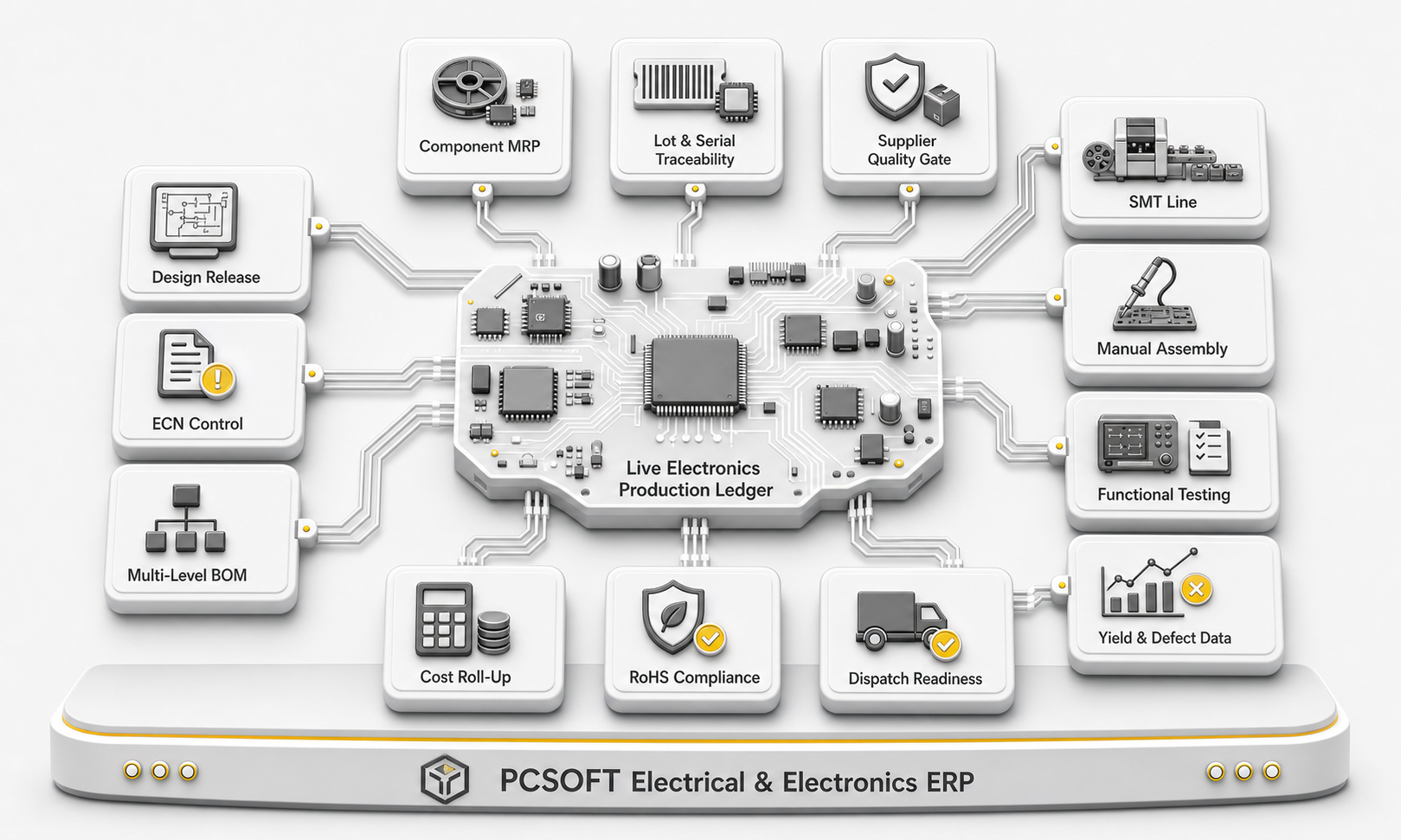
An electronics manufacturing facility cannot run efficiently when engineering, procurement, and production work in separate silos. An engineering modification to a circuit layout must instantly update procurement buying requirements. Procurement component lead times must dictate active SMT and manual assembly schedules. Testing failures at a final inspection bay must immediately alert engineering and update inventory valuations. By running your entire facility on a unified manufacturing ERP system, PCSOFT ensures that every single transaction, whether it is a design release, an automated component quality gate approval, or an on-site material receipt, updates your central operational ledger and schedule instantly. This tight process integration eliminates manual verification loops, prevents the assembly of outdated layouts, and gives management real-time cost tracking for every electronic asset built.
AUTOMOTIVE WORKFLOWS
Secure Total Control Over High-Velocity Electronics Production
Engineering Design Integration and Revision Governance
Electronics builders lose massive operational velocity and bleed material capital when design rooms operate isolated from shop floor production planners. When an engineering change note (ECN) is stuck in offline emails or unlinked PLM applications, workers continue assembling components using outdated board layouts, creating expensive scrap metal, components, and major delivery delays.
PCSOFT bridges the structural gap between engineering design and floor execution. Schematic files and multi-level Bills of Materials sync directly into the live production ledger, immediately updating active work orders, material requisitions, and routing steps the moment a revision is officially authorized.
Direct CAD, PLM, and PCB Gerber File Import Engines to Instantly Build Complex Multi-Level Production BOMs
Automated Engineering Change Note (ECN) Workflows that Hold, Flush, or Update Active Floor Work Orders Instantly
Alternative Component and Approved Vendor List (AVL) Matrices Embedded into the Core Procurement Engine
Phased Revision Lifecycles (Draft, Approved, Released, Archived) Tied Directly to Active Procurement Gating
Side-by-Side BOM Variance Comparisons Pointing out Component, Material, and Process Cost Impact
Configurable Component Substitution Logic to Handle Sudden Part Shortages without Re-authorizing Parent Part Numbers
Material Requirements Planning and Component-Level Traceability
Managing supply chains for electronics requires tracking long-lead microcontrollers, custom plastics, and thousands of standardized passive components simultaneously. Relying on basic reorder points or decoupled spreadsheets leads to sudden shortages in the assembly bay, forcing high-value machinery to sit incomplete while critical delivery dates slip past.
PCSOFT runs precise, component-driven Material Requirements Planning (MRP) calculations. The transaction engine factors in current component stock, open purchase orders, live assembly schedules, and exact component lead times to build an optimized procurement calendar that preserves corporate cash flow.
Multi-Echelon MRP Executed across Complex, Deeply Nested Electronics Assemblies and Component Sub-groups
Just-In-Time Component Procurement Schedules Tied to Specific SMT and Assembly Milestones
Component-Level Lot and Serial Number Mapping Tracking Items from Supplier Inwards to Specific Assembly Boards
Supplier Delivery Metrics and Quality Inspection Tracking for High-Value Electronic Components
Automated Shortage Warning Dashboards Alerting Procurement Teams to Potential Lead-Time Breaches
Direct Landed-Cost Allocation Spreading Freight, Customs, and Handling Expenses into Component Values
Shop Floor Execution and Testing Yield Intelligence
Most electronics builders know their top-line revenue, but struggle to calculate the true financial margin of an individual production run. When engineering revisions, custom floor alterations, and post-delivery warranty support expenses are absorbed into general overheads, management cannot identify which configurations are profitable and which ones are losing money.
PCSOFT tracks and rolls up every single cost element—from the initial raw steel issue to field warranty service calls. The software bridges shop floor execution with post-delivery field asset management, ensuring you maintain a profitable lifetime service relationship with your clients.
Actual vs. Estimated Production Costing Models Isolating Material, Component, and Labor Variances
Serial Number Tracking Across High-Value Electronics and Technical Component Parts
Integrated Quality History Visibility by Component Lot, SMT Run, Shift, and Final Functional Testing Station
Eco-Compliance Tracking Managing Restrictions on Hazardous Substances (RoHS) and WEEE Mandates
Automated Non-Conformance Reporting (NCR) and Corrective and Preventive Action (CAPA) Workflows
Physical vs. Theoretical Material Consumption Variance Analysis Per Production Run
Inventory & Material Control
Most electronics builders know their top-line revenue, but struggle to calculate the true financial margin of an individual production run. When engineering revisions, custom floor alterations, and post-delivery warranty support expenses are absorbed into general overheads, management cannot identify which configurations are profitable and which ones are losing money.
PCSOFT tracks and rolls up every single cost element—from the initial raw steel issue to field warranty service calls. The software bridges shop floor execution with post-delivery field asset management, ensuring you maintain a profitable lifetime service relationship with your clients.
Actual vs. Estimated Production Costing Models Isolating Material, Component, and Labor Variances
Serial Number Tracking Across High-Value Electronics and Technical Component Parts
Integrated Quality History Visibility by Component Lot, SMT Run, Shift, and Final Functional Testing Station
Eco-Compliance Tracking Managing Restrictions on Hazardous Substances (RoHS) and WEEE Mandates
Automated Non-Conformance Reporting (NCR) and Corrective and Preventive Action (CAPA) Workflows
Physical vs. Theoretical Material Consumption Variance Analysis Per Production Run